
Film, photography & concept by Gaynor Perry
with
Grethe Mangala Jensen
&
Deborah Griffin
Music
written & performed by Gaynor Perry
produced & performed by Noko 440
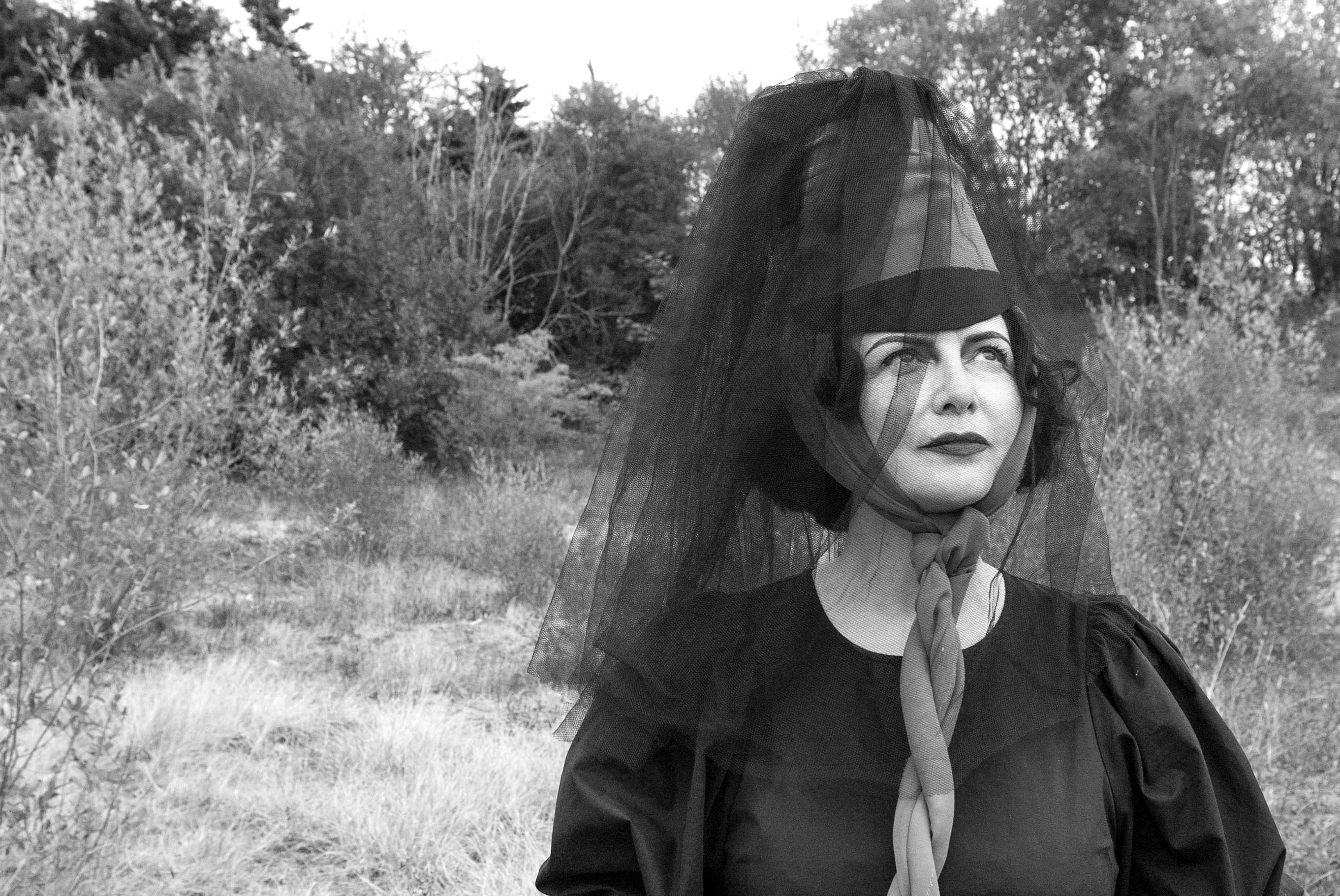
Grethe enters a state of hypnagogic consciousness
as she drowses on the branch of a fallen laurel tree.
 |
| Deborah Griffin |

 |
| Grethe Mangala Jensen |




In these hours
(soh)
batteries and hazel eyes
Without careful aim
we're blown
without careful aim
we’re here now
(toad)
Albion drawn in the ground
with a gemstone
a coiled shell
You are young
unbelieving
To live or grow
like Turing
an opponent
(soh)
We're here
so grow
You are young


 |
| Gaynor Perry |
One of the ways I work with my subconscious, aside from various states of dreaming, is aligned with the concept of "wu wei" (无为), which is a central idea in Taoism, particularly in the Tao Te Ching, authored by Laozi. This concept translates to "non-action" or "effortless action" and emphasises aligning with the natural flow of events rather than forcing things to happen.
In my lyric writing, for instance, I often seek to attain moments of serendipity where ideas can flourish freely and simply fall into place. This might involve my hand accidentally tripping up on the keyboard or randomly selecting words from the hallowed dictionary. It’s important that I ascribe a sense of reverence to this process for it to be fruitful. My intentions are clear, and my senses are fully engaged. In this way, I open myself up to possibilities and give significance to whatever arrives, carefully weaving it into the piece. I believe that my subconscious knows better than I do what matters most. My conscious self is merely the tip of the iceberg, with a limited aperture on reality.
Over time, I’ve come to recognise that the part of me guiding this process behaves like an intelligence in its own right — one that feels both deeply personal and strangely other. My subconscious is not a passive reservoir of memories; it’s an active, generative force. It shapes connections, offers symbols, and reveals patterns long before my conscious mind can grasp them. In this sense, the unconscious is the original artificial intelligence: a self‑organising system that processes far more than I can perceive, drawing from layers of experience, intuition, and something that feels like a wider field of knowing.
When I work, I treat this inner intelligence with reverence. The dictionary becomes an oracle, a way of letting the subconscious speak in its own language. Altered states such as dreams, liminal moments and intuitive flashes are pathways into this deeper terrain. I often sense that the “me” I identify with is only one strand of a much larger embroidery. At the same time, I feel like one finger on a hand that moves through layers of reality my conscious mind can barely suspect. My human experience, with all its limitations and sensitivities, feels like a vital contribution to the flourishing of that larger whole. This way of working often feels less like composing and more like participating in a living system.


 |
| Norman Fisher-Jones aka Noko 440 |


The day after we finished filming, I returned to the location and came across an animal spine (pictured above) lying across my path. On closer inspection, it appeared to be a badger spine. There were no other bones nearby. Naturally, I began to wonder how it got there. Did a dog or a fox unearth it and drag it to this spot? What a mysterious offering.
The imagery for this body of work originated from a photograph of Grethe resting on the branch of a fallen laurel tree. Now, I notice a vine climbing one of the limbs on the right-hand side, its form resembling a spine.
This strange and timely motif feels integral to the piece, though I have no explanation for its presence — other than the spirit with which we approached the creation process. Perhaps a profound connection to the sacred spaces of our landscape and the nature within resonated somehow, deep in the labyrinthine, ancient heart of the land.
Who can say?

 |
Digby - farewell to this ethereal boy who departed for his next great adventure a month after taking this photo. |
The seed of this piece began with my piano improvisation, which set the emotional frequency. I had long carried within me a childhood dream of being recorded improvising on the piano. Improvisation is how my love of the piano began — the high notes were lightning, the lower notes thunder. As strange as it might seem, this dream was so deeply seated it never occurred to me that I could make it happen myself; all I needed to do was book a studio. The moment my fingers touched the keys was the initiation point. I let my hands produce patterns, and I responded to those patterns instinctively.
In Artificial Intelligence, the question of how different forms of intelligence evolve became impossible to ignore. The piece emerged from the interplay between these layers: the child’s dream, the adult’s agency, resonance, and the subconscious field. We’re living in a moment where our inner and outer intelligences are meeting. As AI grows in complexity, we are being asked to understand our own minds more deeply — to recognise the vastness within us, and to consider how these different forms of intelligence might shape, challenge, and ultimately transform one another. Perhaps this meeting is not a collision, but a continuation of something that has always been unfolding within us.
For a parallel exploration of similar terrain, see Discovering Projektis (2025), which reflects on the inner life of an AI.
Thanks for visiting!
